Stuff to Do in Rotorua: Quick Answer

The best stuff to do in Rotorua centers on experiencing its unique geothermal activity and deep Maori heritage. For a fall visit, the top priorities are Waimangu Volcanic Valley for its dramatic steam vents, the Polynesian Spa for a cultural soak, and a guided Maori cultural performance. These three elements define the city and offer a mix of nature, wellness, and history. You do not need to rush; three days is the ideal length to see the highlights without feeling exhausted. The cool fall weather enhances the geothermal experience, making the contrast between the crisp air and hot steam particularly striking. This guide provides a detailed breakdown of these experiences, along with practical tips on where to stay and how to get around. You will find specific times to visit, cost estimates, and booking advice to ensure a smooth trip. Skip the generic tourist traps and focus on the authentic experiences that make Rotorua unique. By following this itinerary, you will leave with a deeper understanding of the region and memories that last a lifetime. The key is to balance active exploration with moments of relaxation, allowing the landscape to speak for itself. Start with the geothermal sites in the morning when the light is best, and save the cultural experiences for the evening when the atmosphere is more intimate. This approach ensures you capture the best photos and enjoy the sites at their peak. Do not underestimate the importance of booking in advance, especially for popular tours and spa slots. With a bit of planning, your Rotorua trip will be both effortless and unforgettable. Remember to check local weather forecasts before you go, as fall can bring sudden rain showers. Packing layers is essential for comfort throughout the day.
Free Rotorua trip checklist
Get the printable itinerary outline and packing checklist for Rotorua, sent straight to your inbox.
No spam. One email with your checklist.
Stuff to Do in Rotorua: 7 Experiences Worth Your Time

Rotorua packs steaming ground, Māori culture, redwood forest and a lake into one small city. These seven stops earn their place, listed in an order that makes a sensible route.
1Te Puia and the Pōhutu Geyser
Te Puia sits inside the Whakarewarewa valley, home to Pōhutu, the largest active geyser in the southern hemisphere, which erupts often during the day. The New Zealand Māori Arts and Crafts Institute is here too, with carvers and weavers at work. Go early, before the tour buses arrive.
2The Redwoods in Whakarewarewa Forest
Minutes from the centre, Whakarewarewa Forest (known as the Redwoods) holds tall California redwoods planted more than a century ago. There are free walking and mountain-bike tracks, a treetop walk on suspension bridges, and an evening lantern trail after dark. Wear sturdy shoes, because the paths are muddy after rain.
3Hell’s Gate Geothermal Park and Mud Spa
About fifteen minutes east of town, Hell’s Gate has bubbling mud, steaming vents and a hot waterfall. Finish with the sulphur spa and a mud bath. Bring a towel and spare clothes, since the smell of sulphur clings.
4Skyline Rotorua: Gondola and Luge
A gondola climbs Mount Ngongotahā for views over Lake Rotorua, and a luge track brings you back down. It is an easy stop for families and works best on a clear day.
5Kuirau Park
Kuirau Park is a free public park a short walk from the centre, where steam rises from the ground, mud pools bubble and a thermal foot bath lets you rest tired feet. It looks best in the evening, when the steam catches the light.
6Polynesian Spa
Soak in geothermal pools beside Lake Rotorua. Late afternoon or after dark is calmer, and it is a good way to end a day of walking.
7Velocity Valley: Zorb and Adrenaline Rides
Rotorua is the home of the Zorb, a giant inflatable ball that you roll down a hill in. Velocity Valley also has a giant swing and the Shweeb, a pedal-powered monorail. Book ahead in school holidays.
Best Photo Spots & Scenic Views
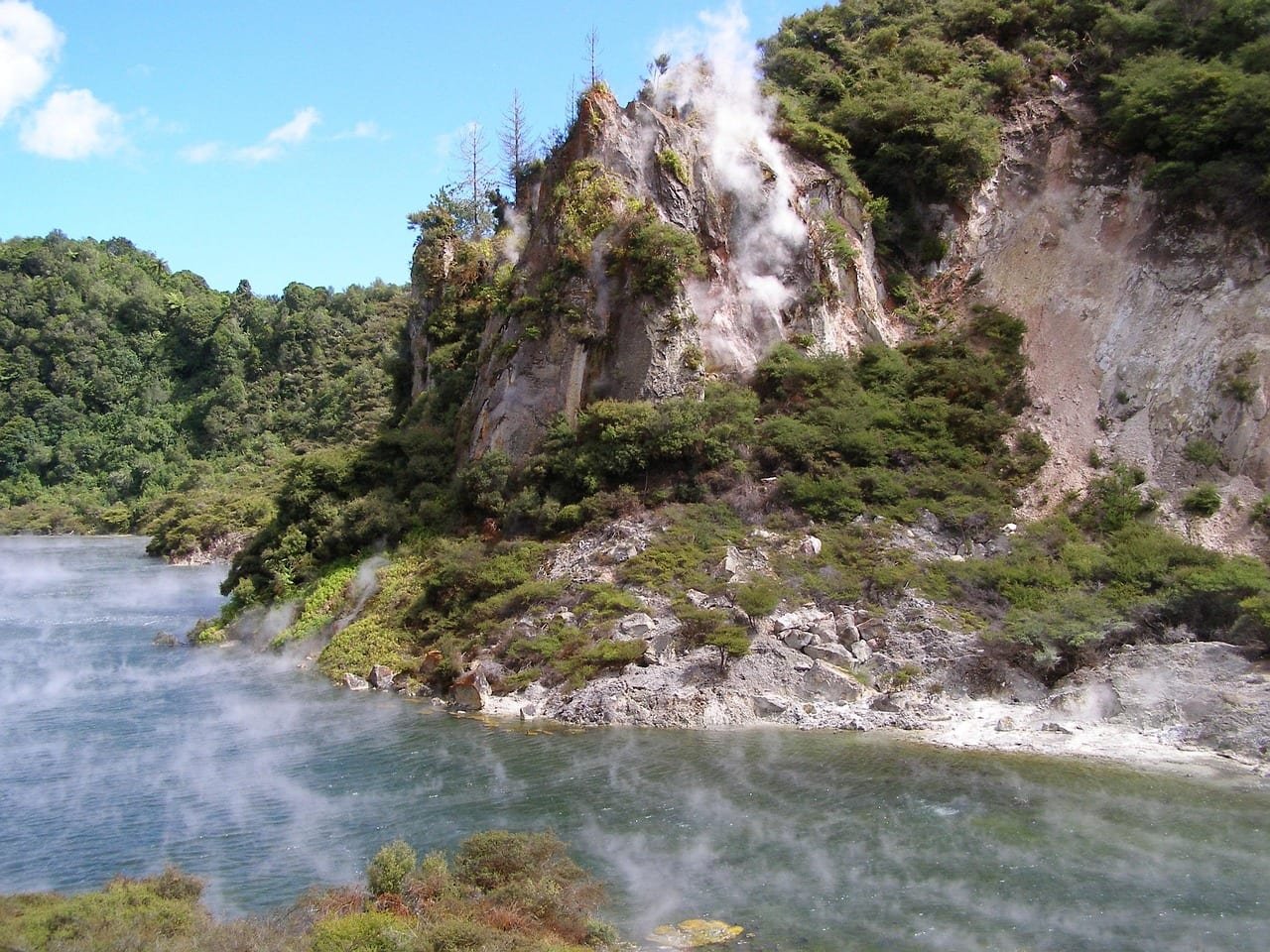
Rotorua offers some of the most dramatic landscapes in New Zealand, and capturing them on camera is a must. The geothermal areas provide a surreal backdrop that is hard to find anywhere else, with steam rising from the ground and colorful terraces of mineral deposits. Waimangu Volcanic Valley is the prime location for this, especially in the morning when the light hits the steam at a low angle. The steam creates a natural filter that softens the light and adds a dreamy quality to your photos. Bring a wide-angle lens to capture the scale of the valley and the density of the steam. The colors in the valley are subtle but beautiful, ranging from the deep greens of the forest to the whites and yellows of the mineral deposits. These colors are most visible in the early morning or late afternoon when the light is warm. Avoid midday, when the harsh sunlight can wash out the colors and make the steam look flat. Another great spot for photos is the edge of Lake Rotorua, where you can capture the reflection of the mountains in the water. The lake is large and deep, and the water is often calm, making for perfect reflections. The best time to go is at sunrise or sunset, when the light is golden and the sky is filled with color. Bring a tripod if you plan to take long-exposure shots, as the water can be slightly choppy. The town center is also a good place for street photography, with its mix of historic buildings and modern cafes. The architecture is a mix of styles, reflecting the town's history as a spa town. Look for details like old signs, brickwork, and window displays. The people of Rotorua are friendly and often happy to pose for a photo, so do not be afraid to ask. The mix of nature and town gives you a variety of photo opportunities that can fill a camera roll. Do not forget to look up, as the sky over Rotorua is often clear and blue, providing a great contrast to the green landscape. The stars are also visible at night, especially in the darker areas outside the town. If you are interested in astrophotography, Rotorua is a great place to try it. The lack of light pollution makes the stars appear brighter and more numerous. This is a unique aspect of the Rotorua experience that many visitors overlook. By focusing on these specific spots, you will capture the essence of the region and create photos that tell a story. The key is to be patient and wait for the right light, as the geothermal landscape changes quickly with the weather. A little planning and a lot of patience will result in photos that you will treasure for years to come. Do not rush the process, and take the time to compose your shots carefully. The result will be worth the effort.
For more background on the area, see Rotorua on Wikipedia.
Where to Stay: Areas & Budgets

Choosing where to stay in Rotorua is one of the most important decisions you will make, as it affects how you get around and what you can do. The town is compact, but the geothermal sites are spread out, so your location matters. The city center is the most convenient option, as it is close to most of the main attractions and has a good selection of restaurants and shops. It is also the most expensive area, with hotels and hostels ranging from mid-range to luxury. If you are on a budget, consider staying in the suburbs of Rotorua, which are quieter and cheaper. These areas are still close to the center, but you will need to use a car or public transport to get to the geothermal sites. The best areas to stay depend on your priorities. If you want to be close to the action, the city center is the way to go. If you want a quiet, relaxing stay, the lakeside areas are a good choice. The lakeside offers beautiful views and a peaceful atmosphere, but it is further from the center. You will need to use a car or taxi to get to the geothermal sites. The best time to book your accommodation is in the spring, as the fall season is busy and prices can rise. Do not wait until the last minute to book, as the best hotels fill up quickly. The cost of accommodation varies widely, with hostels starting at around $30 per night and luxury hotels going up to $300 or more. There are also many vacation rentals and apartments available, which are a good option for longer stays or families. These often come with a kitchen, which can save you money on food. The best places to stay are those that offer a mix of comfort and convenience, with easy access to the main attractions. Do not be afraid to ask for recommendations from locals, as they often know the best spots that are not listed on the major booking sites. This can save you money and give you a more authentic experience. The key is to find a place that fits your budget and your style, and that is close to the things you want to do. By choosing the right location, you will make your trip easier and more enjoyable. Do not underestimate the importance of a good night's sleep, as it will help you recover from the day's activities. A comfortable bed and a quiet room are essential for a good trip. Look for reviews that mention the quality of the sleep, as this is a factor that is often overlooked. By focusing on these details, you will ensure that your stay in Rotorua is as comfortable as it is memorable. The right accommodation can make all the difference to your trip, so take the time to choose carefully. Do not just look at the price, but also consider the location, the amenities, and the reviews from other travelers. This will help you make an informed decision and avoid any surprises. By planning your stay carefully, you will be able to make the most of your time in Rotorua and enjoy every moment of it. The key is to find a balance between cost and comfort, and to choose a location that suits your needs. This will ensure that your trip is a success and that you have a great time in one of New Zealand's most unique cities.
Best Time to Visit & How Many Days: Stuff to Do in Rotorua

Fall is one of the best times to visit Rotorua, as the weather is cool and the crowds are smaller than in the summer. The temperatures range from 5 to 15 degrees Celsius, which is perfect for hiking and exploring the geothermal sites. The steam from the vents is more visible in the cool air, making the landscape even more dramatic. The days are shorter, but the light is softer and more beautiful, which is great for photography. The fall foliage adds color to the landscape, with the trees turning yellow and orange. This is a great time to visit if you want to see the natural beauty of the region. The crowds are smaller than in the summer, so you can enjoy the sites without feeling rushed. The prices are also lower, as it is the off-season for tourism. This is a great time to visit if you are on a budget. The only downside is that some of the outdoor activities may be closed due to the weather, so check the local forecast before you go. The ideal length of stay is three days, which gives you enough time to see the main attractions without feeling rushed. You can spend one day on the geothermal sites, one day on the Maori culture, and one day on the lake and town. This is a balanced itinerary that covers all the bases. If you have more time, you can add a day trip to Hobbiton or Agrodome, which are both worth the trip. These day trips are easy to arrange and can be added to your itinerary without too much hassle. The key is to plan your days carefully, so that you do not spend too much time traveling and not enough time experiencing. Use a car or a tour to get around, as public transport is limited. This will give you the flexibility to explore at your own pace and to visit the spots that interest you most. By planning your trip carefully, you will be able to make the most of your time in Rotorua and enjoy every moment of it. The fall season is a great time to visit, and a three-day stay is the ideal length. Do not rush your trip, and take the time to enjoy the experience. Rotorua is a place that rewards those who take their time and explore deeply. By following this advice, you will have a great trip and make the most of your visit to this unique part of New Zealand. The key is to be flexible and to adjust your plans as needed, based on the weather and your energy levels. This will ensure that your trip is a success and that you have a great time in Rotorua.
Getting There & Getting Around

Getting to Rotorua is easy, as it is well-connected by road and air. The nearest major airport is Auckland, which is about a three-hour drive away. You can also fly into Rotorua Airport, which has direct flights from Auckland and Christchurch. This is the easiest way to get there, as it saves you the hassle of driving. Once you are in Rotorua, the best way to get around is by car, as the geothermal sites are spread out and public transport is limited. You can rent a car at the airport or in the city center, and this will give you the flexibility to explore at your own pace. If you do not want to drive, you can use a taxi or a tour bus. The taxis are convenient, but they can be expensive, so it is best to use them for short trips. The tour buses are a good option if you want to see the main attractions without the hassle of driving. They are usually included in the price of the tour, so they are a cost-effective way to get around. The public transport system is limited, with buses running to the main attractions, but they are not frequent, so you may have to wait a while. This is not the best option if you are short on time, but it is a good option if you are on a budget. The key is to plan your transport carefully, so that you do not waste time waiting for a bus or driving in traffic. By planning your transport in advance, you will be able to make the most of your time in Rotorua and enjoy every moment of it. The best way to get around is by car, but a tour bus is a good alternative. Do not underestimate the importance of having a reliable way to get around, as it will affect your ability to see the sites. By choosing the right transport, you will ensure that your trip is smooth and enjoyable. The key is to be flexible and to adjust your plans as needed, based on the traffic and the weather. This will ensure that your trip is a success and that you have a great time in Rotorua. Do not be afraid to ask for directions, as the locals are friendly and happy to help. This can save you time and ensure that you do not get lost. By planning your transport carefully, you will be able to make the most of your time in Rotorua and enjoy every moment of it. The best way to get around is by car, but a tour bus is a good alternative. Do not underestimate the importance of having a reliable way to get around, as it will affect your ability to see the sites. By choosing the right transport, you will ensure that your trip is smooth and enjoyable.
A 3-Day Rotorua Itinerary for Fall

This 3-day itinerary is designed to give you a well-rounded experience of Rotorua, covering the main attractions and allowing you to relax and enjoy the local culture. Day 1 is focused on the geothermal sites, which are best visited in the morning. Day 2 is focused on the Maori culture, which is best experienced in the evening. Day 3 is focused on the lake and the town, which are best visited in the afternoon. This itinerary is flexible, so you can adjust it based on your interests and the weather. Do not try to do too much in one day, as it will be tiring and you will miss out on the experience. Take your time and enjoy the moment. The key is to balance activity with relaxation, so that you do not burn out. By following this itinerary, you will be able to see the best of Rotorua in three days and have a great time. Do not be afraid to skip a spot if it does not interest you, and spend more time at the ones that do. This is your trip, so make it your own. The key is to be flexible and to enjoy the experience. By following this advice, you will have a great trip and make the most of your visit to Rotorua. This is the perfect length of stay to see the main attractions without feeling rushed. Do not overpack your schedule, and leave some time for spontaneity. This is where the best memories are made. By following this itinerary, you will be able to see the best of Rotorua in three days and have a great time. Do not be afraid to ask for recommendations from locals, as they often know the best spots that are not listed on the major booking sites. This can save you money and give you a more authentic experience. The key is to find a balance between the planned and the unplanned, so that you do not miss out on anything. By planning your trip carefully, you will be able to make the most of your time in Rotorua and enjoy every moment of it. The best way to do this is to have a loose plan, but to be open to change. This is the key to a great trip. Do not be afraid to change your plans, and to follow your instincts. This is where the best memories are made. By following this advice, you will have a great trip and make the most of your visit to Rotorua.
Planning more trips? See our guides to Queenstown Hidden Gems, Costa Rica Places to Visit and Things to See in Colombia.
Where to Eat in Rotorua: What to Try
Rotorua’s signature meal is the hāngi, food slow-cooked in an earth oven heated with volcanic stones. Several Māori cultural experiences serve one with a concert, including Tamaki Māori Village and Mitai Māori Village. Book a few days ahead and ask what the evening includes. At Whakarewarewa village you can also eat food cooked in natural geothermal steam boxes.
For everyday meals, Eat Streat on Tutanekai Street is a pedestrian block of restaurants and cafés, and an easy place to start. Coffee is taken seriously in New Zealand, so ask for a flat white. Smaller places close on some days of the week, so check before you walk across town.
Day Trips from Rotorua
Rotorua sits in the middle of the North Island’s geothermal region, so the best day trips are short drives.
Wai-O-Tapu and Waimangu
Wai-O-Tapu Thermal Wonderland, about thirty minutes south, has the Lady Knox Geyser, the Champagne Pool and the colourful Artist’s Palette. Waimangu Volcanic Valley, about twenty minutes away, was formed by the 1886 eruption of Mount Tarawera, and its walk leads down to Lake Rotomahana.
Lake Rotoiti and Okere Falls
Northeast of the city, a short track at Okere Falls follows the Kaituna River to its waterfalls, and the river is also a popular rafting run. Nearby Lake Rotoiti is good for a swim or a picnic.
Hobbiton Movie Set
The Hobbiton Movie Set in Matamata is about an hour away. Tours are guided and timed, so book ahead.
Taupō, Huka Falls and Craters of the Moon
Taupō, about an hour south, is a good base for Huka Falls, a powerful stretch of blue-green river, and the steaming Craters of the Moon walk.
Waitomo Caves and Mount Maunganui
The Waitomo glowworm caves are about two hours west. For a beach day, Tauranga and Mount Maunganui are about an hour north, and the walk up Mauao rewards you with sea views.
FAQ: Common Questions About Rotorua

Is Rotorua worth visiting?
Yes, Rotorua is worth visiting for anyone interested in geothermal activity, Maori culture, and New Zealand's natural beauty. The combination of these elements makes it a unique destination that is not found anywhere else. You do not need to be an adventure seeker to enjoy Rotorua, as there are plenty of relaxed activities available, such as spa visits and lake cruises. The town is compact and easy to navigate, making it a good destination for all ages. The cost of visiting Rotorua is reasonable, with a wide range of accommodation and dining options available. You can visit Rotorua on a budget or splurge on luxury experiences, depending on your preferences. The key is to plan your trip carefully and to book in advance, especially for popular tours and spa slots. By doing so, you will ensure a smooth and enjoyable trip. Rotorua is a destination that rewards those who take the time to explore and learn about the local culture and landscape. By visiting Rotorua, you will gain a deeper understanding of New Zealand's unique environment and heritage. This is a trip that will stay with you for a long time, and it is well-worth the effort. Do not underestimate the value of a well-planned trip, as it can make all the difference to your experience. By following the tips in this guide, you will be able to make the most of your visit to Rotorua and have a great time. The key is to be open to new experiences and to enjoy the moment. This is the best way to travel, and it is the best way to experience Rotorua. Do not be afraid to step out of your comfort zone, as it is where the best memories are made. By following this advice, you will have a great trip and make the most of your visit to Rotorua.
Where are the hot pools in Rotorua?
The main hot pools in Rotorua are located at Polynesian Spa, Kuirau Park, and Whakarewarewa. Polynesian Spa is the most popular and offers a range of thermal pools and treatments. Kuirau Park is a public park with natural hot springs and is free to enter. Whakarewarewa is a living Maori village where you can see the hot springs in a natural setting. Each of these spots offers a different experience, so you can choose the one that suits your preferences. Polynesian Spa is the best option if you want a luxurious and relaxing experience. Kuirau Park is the best option if you want a natural and affordable experience. Whakarewarewa is the best option if you want to learn about Maori culture and see the hot springs in a traditional setting. Do not forget to bring a towel and a swimsuit, as these are required for all the hot pools. The water is hot, so do not stay in for too long, and drink plenty of water to stay hydrated. The key is to enjoy the experience and to relax. By visiting the hot pools, you will be able to unwind and recharge after a day of exploring. This is a must-do activity for anyone visiting Rotorua, and it is well-worth the effort. Do not underestimate the therapeutic benefits of the hot springs, as they can help with muscle pain and stress. By following this advice, you will be able to make the most of your visit to the hot pools and have a great time. The key is to be prepared and to enjoy the moment. This is the best way to experience the hot pools in Rotorua, and it is a highlight of any trip to the region. Do not be afraid to try a treatment, as it is a great way to relax and enjoy the experience. By following this advice, you will have a great trip and make the most of your visit to Rotorua.
What is the best time of day to visit the geothermal valleys?
The best time of day to visit the geothermal valleys is in the early morning, between 8 and 10 am. This is when the light is best for photography, and the steam is most visible. The valleys are less crowded in the morning, so you can enjoy the experience without feeling rushed. The air is cooler in the morning, which makes the steam more dramatic. Do not go in the afternoon, as the light is harsh and the valleys are more crowded. The key is to go early and to take your time. By visiting the geothermal valleys in the morning, you will be able to see the best of the landscape and capture great photos. This is a must-do activity for anyone visiting Rotorua, and it is well-worth the effort. Do not underestimate the beauty of the geothermal landscape, as it is one of the most unique sights in New Zealand. By following this advice, you will be able to make the most of your visit to the geothermal valleys and have a great time. The key is to be prepared and to enjoy the moment. This is the best way to experience the geothermal valleys in Rotorua, and it is a highlight of any trip to the region. Do not be afraid to bring a camera, as the light in the morning is perfect for photography. By following this advice, you will have a great trip and make the most of your visit to Rotorua.