Good Times to Visit Japan: Quick Answer for Autumn Travelers

Good times to visit Japan cluster around two sweet spots: late March to early April for cherry blossoms and mid-October to early December for autumn foliage. For fall specifically, the colors sweep south from Hokkaido in late September to Kyoto and Tokyo by mid-November, giving you a six-week window to catch peak koyo somewhere in the country. This guide gives you seven bucket-list experiences mapped to those regional peaks, a three-day Kyoto-Tokyo itinerary you can follow day by day, and a season table so you can match your exact travel dates to the best prefecture. You'll also learn the one transport pass that saves hours of queue time and the packing item every first-timer forgets.
7 Fall Bucket List Experiences in Japan

1Daisetsuzan National Park: First Colors of the Season

Hokkaido's largest national park lights up in late September, weeks before Kyoto sees a single red leaf. Take the Kurodake Ropeway from Sounkyo Onsen to 1,300 meters, then hike 90 minutes to the summit plateau for a 360-degree sea of maple and rowan. The first ropeway departs at 6:30 AM; arrive by 6:00 AM to beat the weekend crowds. Round-trip ropeway ¥2,200; allow four hours total. Check the Sounkyo Visitor Center website for real-time foliage reports.
2Naruko Gorge: Train Ride Through a Crimson Canyon

The JR Rikuu East Line threads through this 100-meter-deep gorge in Miyagi Prefecture, peaking around October 20–30. Ride the local train from Naruko-Onsen Station to Kawatabi-Onsen, 15 minutes, ¥240, and stay in the observation car (car 1) for unobstructed views. Trains run roughly hourly; the 10:15 AM southbound catches the best light on the west cliff face. Combine with an overnight at Naruko Onsen's traditional ryokan for ¥12,000–¥18,000 including kaiseki dinner.
3Oirase Stream: Waterfall Walk in Primeval Forest

A 14-kilometer easy trail follows the Oirase River from Lake Towada to Yakeyama in Aomori, peaking late October. The flat, boardwalked path passes 14 named waterfalls; Choshi Otaki (20 meters) is the most photogenic at 9:00 AM when sun hits the mist. Rent a bicycle at Yakeyama (¥1,000/day) to cover the full length in three hours, or walk the 4.5-kilometer highlight section from Ishigedo to Kumoi-no-Taki in 90 minutes. Buses run every 30 minutes from Aomori Station (2.5 hours, ¥2,500).
4Nikko: Toshogu Shrine Framed by Maple Tunnel

Two hours north of Tokyo, Nikko's UNESCO shrines peak November 5–15. The approach to Toshogu is lined with 200-year-old maples that form a red canopy; visit at 8:00 AM opening to photograph without crowds. Entry ¥1,300 for the shrine complex; add ¥1,000 for the Taiyuinbyo mausoleum. Stay overnight at a ryokan near Chuzenji Lake (¥15,000–¥25,000) to catch the lakeside colors at sunset, then take the 7:00 AM bus to Kegon Falls for morning light.
5Kyoto: Eikando Temple Night Illumination

Eikando's garden maples turn brilliant vermilion by mid-November, and the temple runs evening illuminations 5:30–8:30 PM (¥1,000). Enter at 5:30 PM sharp; the path from the main gate to the Tahoto pagoda takes 20 minutes at a slow pace, letting you shoot the reflection pond before the tripod line forms. Daytime entry is ¥600; a combined ticket saves ¥200. Pair with a 7:00 AM visit to nearby Nanzen-ji's Sanmon gate for crowd-free shots.
6Arashiyama: Bamboo Grove and Togetsukyo Bridge at Dawn

The bamboo grove fills by 9:00 AM; be there at 6:00 AM for empty paths and side-light filtering through the stalks. Walk north to Okochi-Sanso Villa (¥1,000, opens 9:00 AM) for a hilltop garden overlooking the Hozu River valley ablaze with color. Cross Togetsukyo Bridge at 6:30 AM for the classic bridge-framed-mountains shot. The JR Sagano Line from Kyoto Station takes 17 minutes (¥240); first train 5:15 AM.
7Japanese Alps: Kamikochi Valley Alpine Panorama

Kamikochi in Nagano peaks late October. The flat 6-kilometer trail from Kappa Bridge to Myojin Pond follows the Azusa River with the Hotaka peaks reflected in mirror-calm water. First bus from Matsumoto Station arrives 8:30 AM (¥2,600, 90 minutes); stay at a mountain lodge (¥10,000–¥18,000 dormitory) to hike the 3-hour round trip to Mt. Yake's crater at sunrise. The valley closes mid-November; check the Kamikochi Official Website for exact dates.
For more seasonal inspiration in the region, see our Kyoto Summer Bucket List: 8 Essential Experiences and Day Trips From Kanazawa Japan: 7 Fall Bucket List.
Best Photo Spots & Scenic Views for Autumn Colors
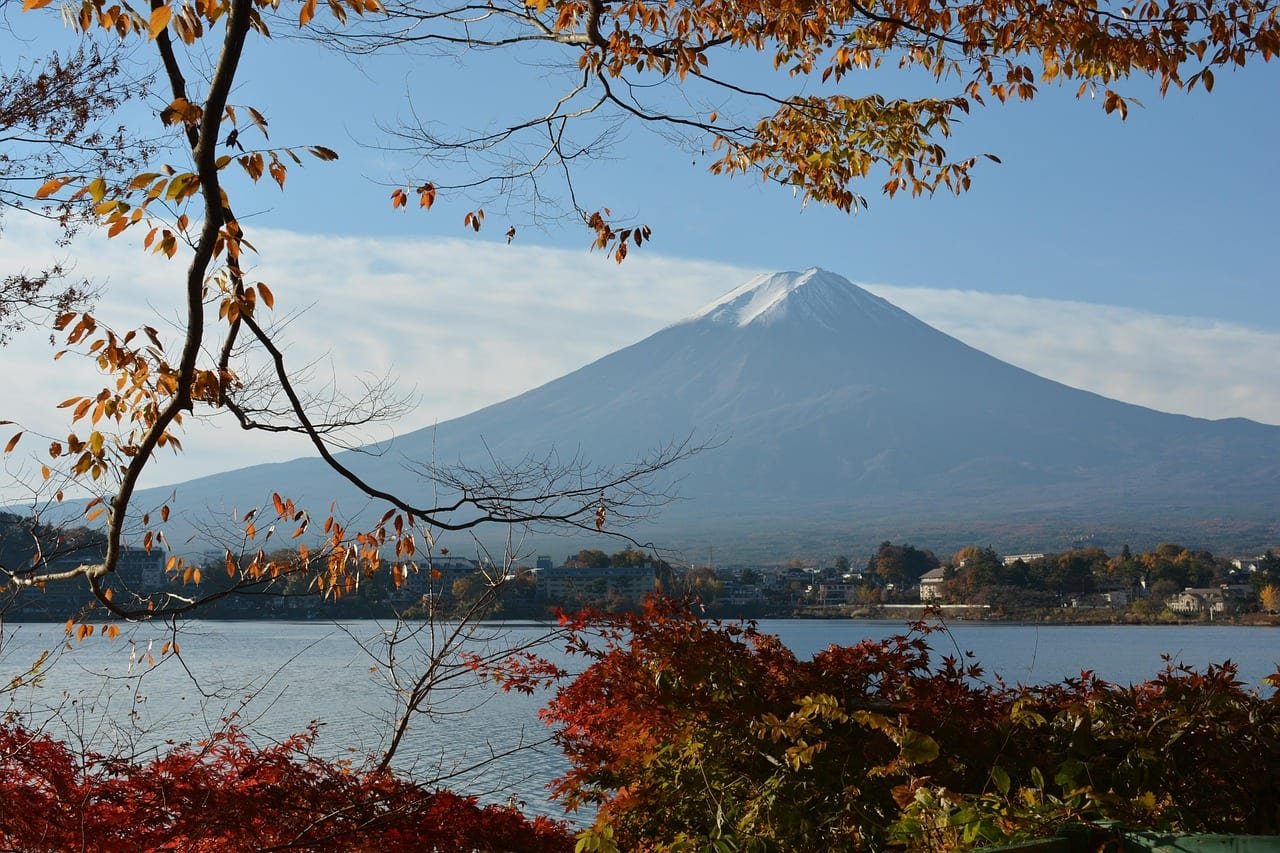
Three locations deliver the highest ratio of visual impact to effort. First, the view from Kiyomizu-dera's wooden stage in Kyoto: the city spreads below a canopy of maple and ginkgo, peaking November 20–30. Arrive at 6:00 AM opening; the stage faces east, catching sunrise on the trees. Second, Lake Kawaguchi's northern shore with Mount Fuji framed by the Momiji Corridor, 60 maples planted along the lake, peaking early November. The 5:30 AM bus from Kawaguchiko Station gets you there for first light; a tripod is allowed on the public promenade. Third, the Shirakawa-go gassho-zukura village in Gifu: thatched roofs dusted with red leaves, illuminated weekends in late October (6:00–9:00 PM, free). Stay overnight in a minshuku (¥8,000–¥12,000) to shoot the pre-dawn mist rising from the Sho River. All three spots have toilets, vending machines, and wheelchair-accessible paths within 200 meters of the main viewpoint.
Where to Stay in Japan for Fall Foliage Access

Match your base to the regional peak you're chasing. In Hokkaido (late Sep–early Oct), stay in Sounkyo Onsen: ryokan cluster at the Kurodake Ropeway base, ¥15,000–¥30,000 including dinner/breakfast, 10-minute walk to the gondola. Tohoku (mid-Oct): base in Aomori City for Oirase Stream day trips, business hotels ¥7,000–¥10,000, 2.5-hour bus each way, or splurge at Lake Towada's lakeside lodges (¥20,000–¥35,000). Nikko (early Nov): book a ryokan near Chuzenji Lake by July for November dates; expect ¥25,000–¥40,000 with kaiseki. Kyoto (mid–late Nov): target Arashiyama or Higashiyama machiya rentals (¥18,000–¥35,000/night for two), walking distance to Eikando, Nanzen-ji, and the bamboo grove. Tokyo (late Nov–early Dec): Shinjuku or Ueno for JR Yamanote Line access to Rikugien and Koishikawa Korakuen gardens; mid-range hotels ¥12,000–¥20,000. Japanese Alps (late Oct): Kamikochi mountain lodges require booking six months ahead; alternatively, stay in Matsumoto City (¥8,000–¥15,000) and take the 90-minute first bus. Pro tip: Japanese booking sites (Rakuten Travel, Jalan) often show inventory hidden from international OTAs; use Chrome's translate feature.
Best Time to Visit Japan & How Many Days to Plan: Good Times to Visit Japan

The table below maps each region's typical foliage peak to the minimum days needed for a satisfying visit. Weather varies by year; check the Japan Meteorological Agency's autumn foliage forecast (updated weekly from September) before finalizing dates.
| Region | Typical Peak | Weather | Crowds | Price Level | Min Days |
|---|---|---|---|---|---|
| Hokkaido (Daisetsuzan) | Sep 25–Oct 10 | 10–18°C, crisp | Low | Moderate | 3 |
| Tohoku (Oirase, Naruko) | Oct 15–30 | 12–20°C, clear | Low–Moderate | Moderate | 3 |
| Nikko / Japanese Alps | Nov 1–15 | 8–16°C, dry | High weekends | High | 2–3 |
| Kyoto / Central Kansai | Nov 15–Dec 5 | 10–18°C, mild | Very High | Very High | 4–5 |
| Tokyo / Kanto | Nov 20–Dec 10 | 12–19°C, sunny | High | Very High | 3–4 |

If you have 14 days, start in Hokkaido and work south with the color front, fly into Sapporo, out of Tokyo. Ten days lets you pick two adjacent regions (e.g., Tohoku + Nikko, or Kyoto + Tokyo). Seven days forces a single-region focus; Kyoto alone rewards four days with day trips to Nara and Uji. For first-timers, a 10-day Kyoto-Tokyo split (4 Kyoto, 1 travel, 5 Tokyo) balances icons and breathing room. The Japan Rail Pass (¥50,000 for 7-day ordinary) only breaks even with a round-trip Tokyo–Kyoto plus one long side trip; otherwise, buy point-to-point Shinkansen tickets (¥14,000 one-way) and use regional passes like the Kansai Thru Pass (¥5,300 for 3 days). For more on seasonal planning across destinations, see Best Season to Visit France: 7 Fall Bucket List Experiences and Best Times to Visit Australia: 7 Fall Bucket List.
Getting There & Getting Around Japan in Autumn

Most international flights land at Tokyo Narita (NRT) or Haneda (HND), Osaka Kansai (KIX), or Sapporo New Chitose (CTS) for Hokkaido-first itineraries. From Narita, the Narita Express (N'EX) reaches Tokyo Station in 60 minutes (¥3,070 reserved, covered by JR Pass). Haneda connects via Tokyo Monorail (¥500, 20 min) or Keikyu Line (¥300, 15 min) to the Yamanote Loop. For a Hokkaido start, fly direct to CTS from Seoul, Taipei, or Shanghai; domestic JAL/ANA flights from Haneda take 1.5 hours (¥15,000–¥35,000 one-way if booked 3 weeks out).
Once in Japan, the transport hierarchy is: Shinkansen for inter-city (Tokyo–Kyoto 2h15m, ¥14,170), limited express for regional hubs (Matsumoto–Nagoya 2h, ¥5,500), local JR lines for gorge/town access (Oirase, Naruko), and municipal buses for trailheads (Kamikochi, Daisetsuzan). An IC card (Suica, Pasmo, ICOCA) covers subways, buses, and convenience stores nationwide, load ¥5,000 on arrival. The Japan Rail Pass now costs ¥50,000 (7-day ordinary); it only pays off if you ride ¥50,000+ in JR trains in seven days. A Tokyo–Kyoto round-trip (¥28,340) plus a Nikko day trip (¥5,000) still leaves a gap; add a Kanazawa or Hiroshima leg to justify it. Otherwise, buy point-to-point tickets and regional passes: Kansai Thru Pass (¥5,300/3 days) for Kyoto/Nara/Osaka subways and private railways; JR East Pass (Nagano, Niigata area) for Alps access. Download the "Japan Travel by NAVITIME" app for offline routing and platform numbers. For packing essentials to handle variable autumn weather, refer to our Pack Smart for Tokyo: A Practical Checklist & Itinerary.
3-Day Kyoto-Tokyo Autumn Itinerary

Day 1: Kyoto, Temples, Gardens, and Gion at Dusk

Start at 6:00 AM at Kiyomizu-dera (opens 6:00, ¥400) for sunrise over the maple-filled valley. Walk down Sannenzaka to Yasaka Shrine by 8:00 AM, then north through Maruyama Park to Shosei-en Garden (¥500, opens 9:00) for early light on the pond maples. Lunch at Omen Kodai-ji (udon, ¥1,200, opens 11:00). 1:00 PM: Eikando (¥600) for the Tahoto pagoda reflection shot. 3:30 PM: Nanzen-ji Sanmon gate (¥600) for the elevated city view. 5:30 PM: Eikando night illumination (¥1,000, separate ticket), stay until 8:00 PM close. Dinner in Pontocho Alley: yakitori at Torito (¥3,000, reserve 5:00 PM slot). Sleep in Higashiyama machiya.
Day 2: Arashiyama Dawn + Afternoon Shinkansen to Tokyo

5:15 AM: First JR Sagano Line to Saga-Arashiyama (¥240). 6:00 AM: Bamboo Grove empty, side-light photos. 6:30 AM: Togetsukyo Bridge for mountain reflection. 7:30 AM: Okochi-Sanso Villa (opens 9:00, ¥1,000), wait at the gate for opening, then hilltop garden. 9:30 AM: Tenryu-ji (¥500) garden maples. 11:00 AM: Return to Kyoto Station, coin locker large bags (¥600/day). 12:00 PM: Shinkansen Hikari to Tokyo (2h15m, ¥14,170 reserved). 2:30 PM: Check in Shinjuku. 3:30 PM: Meiji Jingu outer garden ginkgo avenue (free, peaks late Nov). 5:30 PM: Shinjuku Gyoen (¥500, closes 4:30 PM, check hours) or Rikugien (¥300, open until 5:00 PM) for evening maples. Dinner: Omoide Yokocho alley, ramen at Ichiran (¥1,000).
Day 3: Tokyo Gardens, Museums, and Departure

7:00 AM: Rikugien (opens 9:00, wait at gate for first entry) for the Tsutsuji-no-Chaya teahouse view over the central pond maples. 9:30 AM: Koishikawa Korakuen (¥300, opens 9:00), older, more intimate daimyo garden. 11:30 AM: Tokyo National Museum in Ueno Park (¥1,000) for a cultural warm-up if your flight is evening. 1:30 PM: Lunch in Ameya-Yokocho market (street food, ¥1,500). 3:00 PM: Narita Express from Tokyo Station (60 min, ¥3,070) for 6:00 PM+ flights. If flying from Haneda, Keikyu Line 20 min (¥300). Adjust Day 3 morning for earlier flights: skip Ueno, add 6:00 AM Hamarikyu Gardens (¥300, opens 9:00, same gate-wait strategy) for seawater ponds with autumn color.
FAQ: Autumn Travel in Japan

Which month is best for a first trip to Japan in autumn?
November is the safest single month. Kyoto and Tokyo both hit peak foliage mid-to-late November, domestic crowds are lower than during Golden Week or Obon, and temperatures (10–18°C) are comfortable for walking. Book hotels and Shinkansen seats by August for November dates.
When should you visit for cherry blossoms instead?
Late March to early April in Tokyo and Kyoto; early May in Hokkaido. The Japan Meteorological Agency issues the official sakura forecast in January. Hotels in Kyoto book six months ahead; secure a refundable rate by October.
Rainy season, typhoons, heat and snow, how much do they really matter in autumn?
Typhoon season tails off by late October; September arrivals face a 20% chance of a storm disrupting transport for 24–48 hours (check JMA typhoon tracks). The autumn rain front (shurin) brings steady drizzle to the Pacific side in early October, pack a lightweight Gore-Tex shell. Snow arrives in Hokkaido and the Alps by late November; carry chains if driving mountain passes. For official advisories, see the Japan National Tourism Organization and Japan on Wikipedia.
Free Japan trip checklist
Get the printable itinerary outline and packing checklist for Japan, sent straight to your inbox.
No spam. One email with your checklist.